THE HOURSTEAD JOURNAL / WATCH WINDERS
What Is a Watch Winder? How It Works and Whether You Need One
A clear guide to what a watch winder does, whether you need one and the compatibility checks that matter before using it.
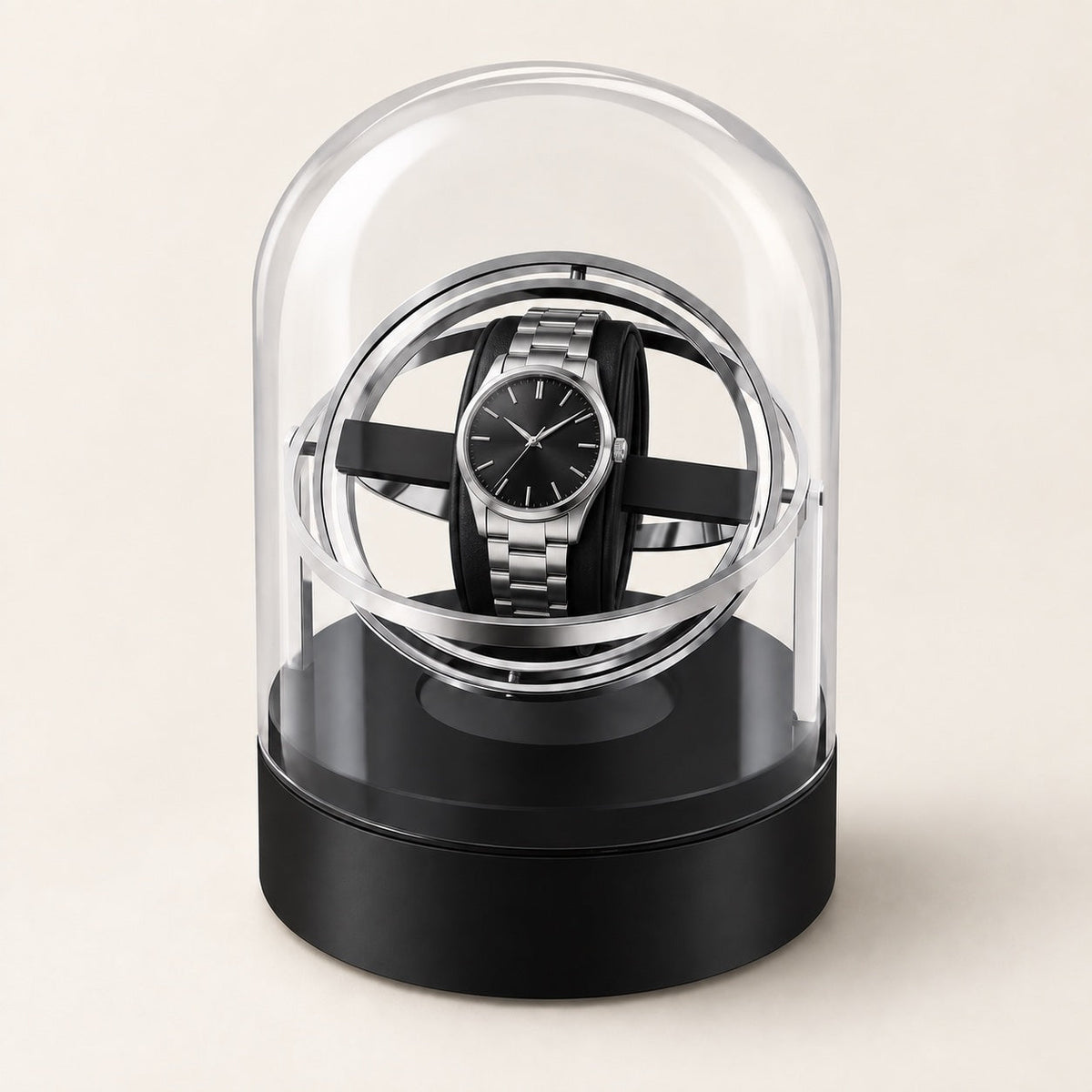
A watch winder is a powered holder that turns an automatic watch while it is off your wrist. Its purpose is convenience: keeping the movement running so that the time and any calendar complications do not need resetting before the next wear. It is not a repair tool, and it is not necessary for every watch.
How does a watch winder work?
An automatic mechanical watch stores energy in a mainspring. As you move your wrist, a rotor inside the movement turns and helps wind that spring. A watch winder imitates some of that motion by rotating the watch on a cushion in timed cycles. The exact direction and number of turns needed depend on the movement, not on the appearance of the watch.
A good starting point is your watchmaker's manual or the movement maker's guidance. If the instructions do not specify winding direction or turns per day, ask an authorised service centre before using a new setting. Avoid treating a generic number found online as a universal rule.
Do automatic watches need a winder?
No. A healthy automatic watch can usually be left unworn and allowed to stop. When you want to wear it again, follow its maker's instructions for winding and setting it. For example, Rolex advises manually winding a stopped watch before setting it. That is a model-specific care recommendation, not a reason to keep every automatic watch on a winder.
A winder may be useful if you rotate several automatic watches frequently, dislike resetting them, or own a watch with a calendar that takes time to set. If you wear one watch every day, the benefit is smaller. Quartz and manually wound watches do not gain the same winding benefit.
Can a watch winder damage a watch?
There is no useful yes-or-no answer for every model. The important issues are compatibility and use. A poorly fitting cushion can put unnecessary pressure on a bracelet or strap. An unsuitable rotation programme may fail to wind the watch as intended. Always check the watch manufacturer's instructions and the winder's available settings, and stop using the setup if you notice abnormal operation. A winder does not replace scheduled servicing.
What should you check before choosing one?
- Movement compatibility: confirm whether your watch is automatic and what winding direction and programme its movement requires.
- Fit: the watch should sit securely without stretching a strap or forcing a bracelet closed.
- Capacity: choose the number of positions for the watches you actually rotate, allowing room for larger cases.
- Placement: consider the power source, access and where the winder will sit in your home.
If you are still deciding between keeping a watch running and storing it at rest, read our watch winder guide. For the physical options, explore Hourstead watch winders. Check each product's stated settings and dimensions against your particular watch before ordering.