THE HOURSTEAD JOURNAL / WATCH STORAGE
How to Store Automatic Watches Between Wears
A practical guide to storing automatic watches at home: the right environment, box or winder, cushion fit and everyday care.
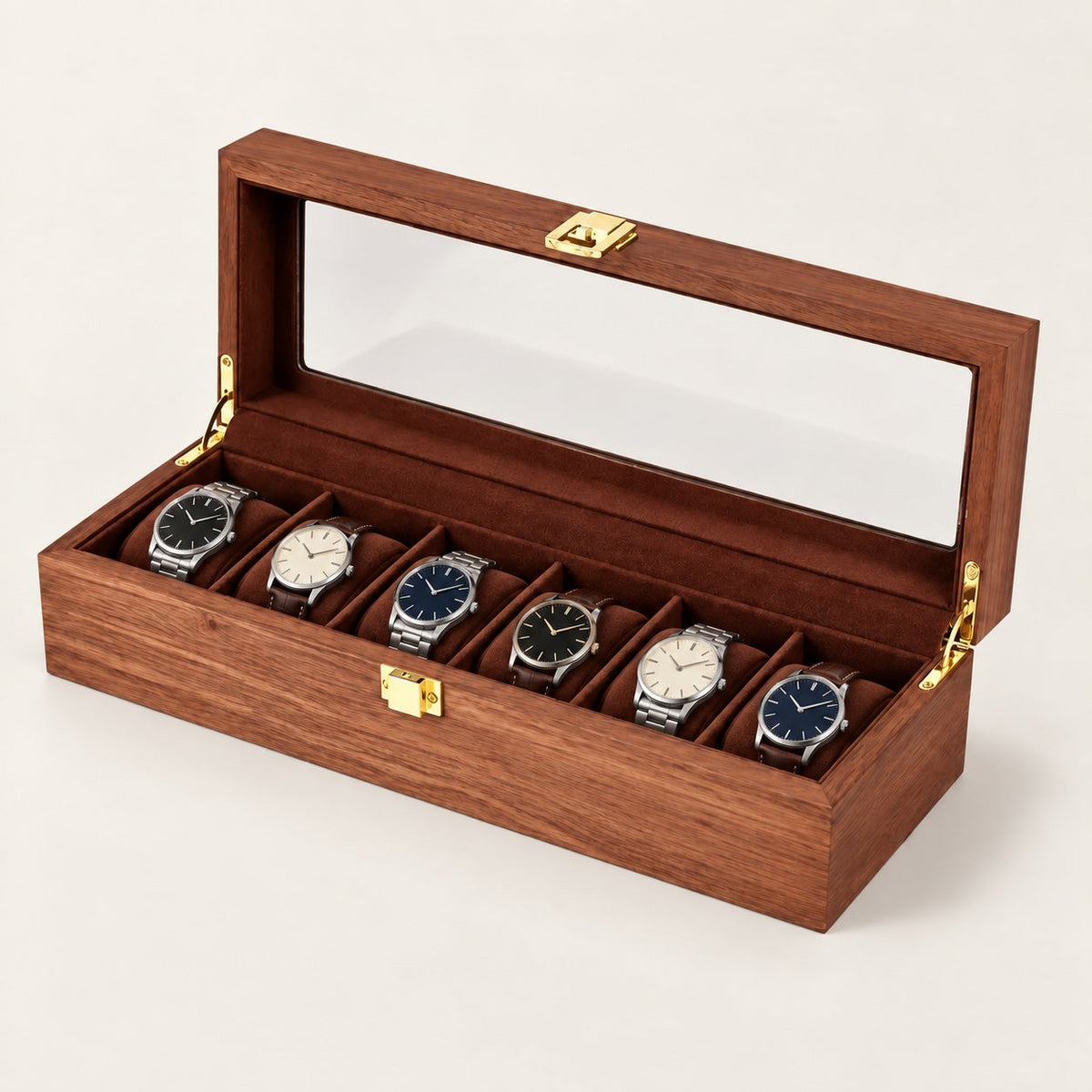
The best place to keep a watch is not necessarily the most elaborate one. For most collections, the essentials are a secure fit, a clean environment and a routine that matches the watch itself. This guide focuses on automatic watches, but the physical storage principles apply to quartz and hand-wound pieces too.
Can an automatic watch be left to stop?
Yes. An automatic watch is powered by a spring that is replenished as its rotor moves. When the watch is not worn, its stored energy eventually runs out and it stops. That does not mean the watch has been damaged. Before wearing it again, use the maker's instructions to wind and set it correctly; setting procedures can differ between movements and complications.
If you change watches often and prefer them ready to wear, a watch winder may be convenient. It is a choice, not an obligation. Check the required direction and winding programme for your own movement rather than copying another watch's settings.
Where should you store watches at home?
Choose a stable, dry, ventilated place away from prolonged direct sunlight, strong magnetic sources and extremes of temperature. Seiko's storage advice recommends a dust-free room that is neither too humid nor too hot or cold, and a presentation box or similar container for longer periods. The manufacturer's instructions for your particular watch take priority.
A drawer can work if each piece is protected from knocks and bracelets cannot rub against neighbouring cases. A dedicated watch box makes a collection easier to see and keeps watches separated, but the interior matters more than the exterior finish.
Should a watch be stored flat or on a cushion?
Either can be suitable when the watch is supported and nothing is pressing on the crown, crystal or bracelet. A cushion should hold the piece securely without forcing a small bracelet open. If the bracelet is tight around the cushion, use a smaller or adjustable insert. A watch stored flat should not rest against loose jewellery, keys or other hard objects.
Check internal clearance as well as the advertised number of slots. A deep case, tall crystal or large crown may need more room than a slim dress watch. If a product page does not state a dimension you need, ask before buying.
A simple storage routine
- Remove moisture and surface marks with a soft cloth, following the maker's care instructions for the watch and strap.
- Make sure the piece is dry before placing it in an enclosed case.
- Fasten it around a correctly sized cushion or lay it in a separate compartment.
- Keep the box in a stable location, away from magnets and accidental knocks.
- For longer periods, follow any model-specific service or storage instructions from the watchmaker.
For help choosing capacity and fit, see our watch storage guide. If you regularly take watches away from home, a travel case provides a different kind of protection: it is designed around movement and packing rather than display.